
Fire Alarm
Technician Toolkit.
Eight tools and organizers I personally use in the field, selected from my experience as a NICET Level IV fire alarm technician.
Firsthand recommendations from Albert Concepcion
Founder, The Fire Alarm Network · NICET Level IV, Fire Alarm Systems
Electrical Testing
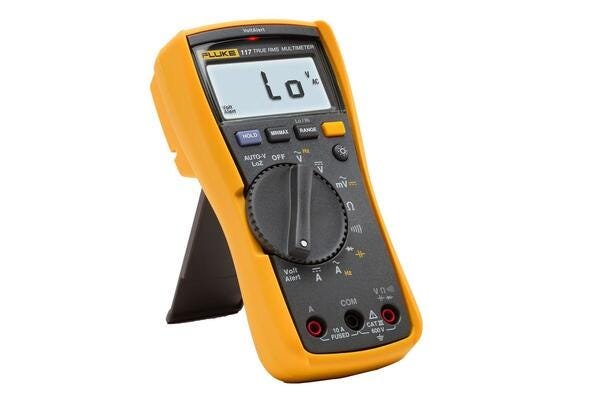
Fluke 117
A digital multimeter is a core part of my fire alarm toolkit. The 117 supports AC/DC voltage, resistance and continuity checks—the measurements behind many electrical troubleshooting tasks.
- True-RMS AC measurements and a backlit digital display.
- AutoVolt, low-impedance mode and VoltAlert non-contact AC detection.
- Resistance, continuity, capacitance and frequency functions.
Exact model: Fluke 117 · Manufacturer part: 2538815
Choose the standalone 117 when comparing listings; combo kits contain additional equipment.
Cable Testing & Troubleshooting
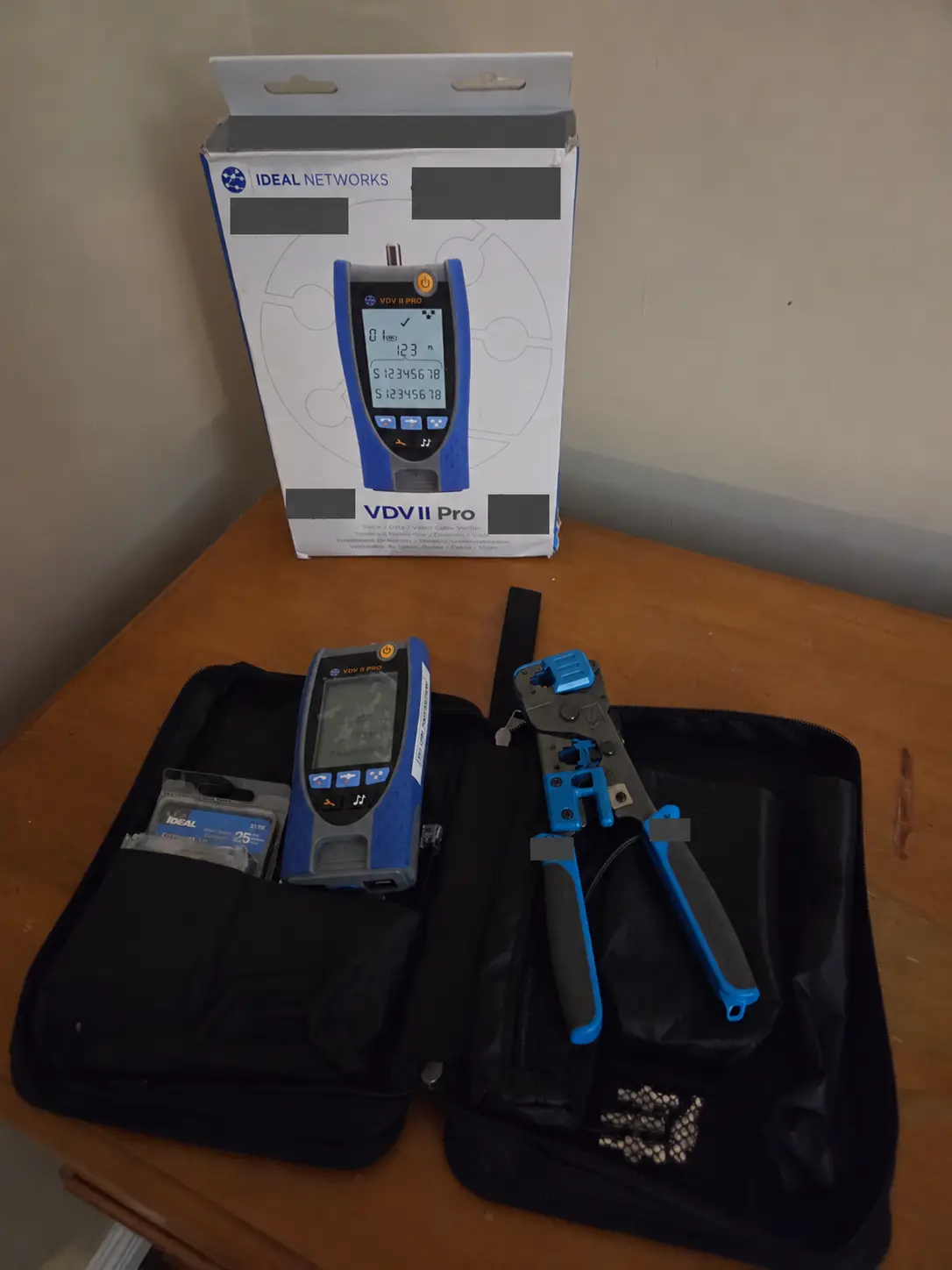
IDEAL VDV II Pro
This is the cable verifier in my toolkit for copper voice, data and video cabling. It adds wiremap and distance-to-fault information when a basic continuity check is not enough.
- Checks for opens, shorts, miswires and split pairs.
- TDR measures cable length and distance to an open or short.
- Supports RJ45, telephone and coax cabling with the appropriate connections.
Exact model: R158003 · Original IDEAL Networks VDV II Pro
This is a cable verifier, not a cable certification instrument. Newer TREND Networks versions may differ.
Availability note: The original Amazon listing was marked unavailable when checked. Review the exact model and included accessories before ordering.
Check original Amazon listing ↗Amazon affiliate link · paid link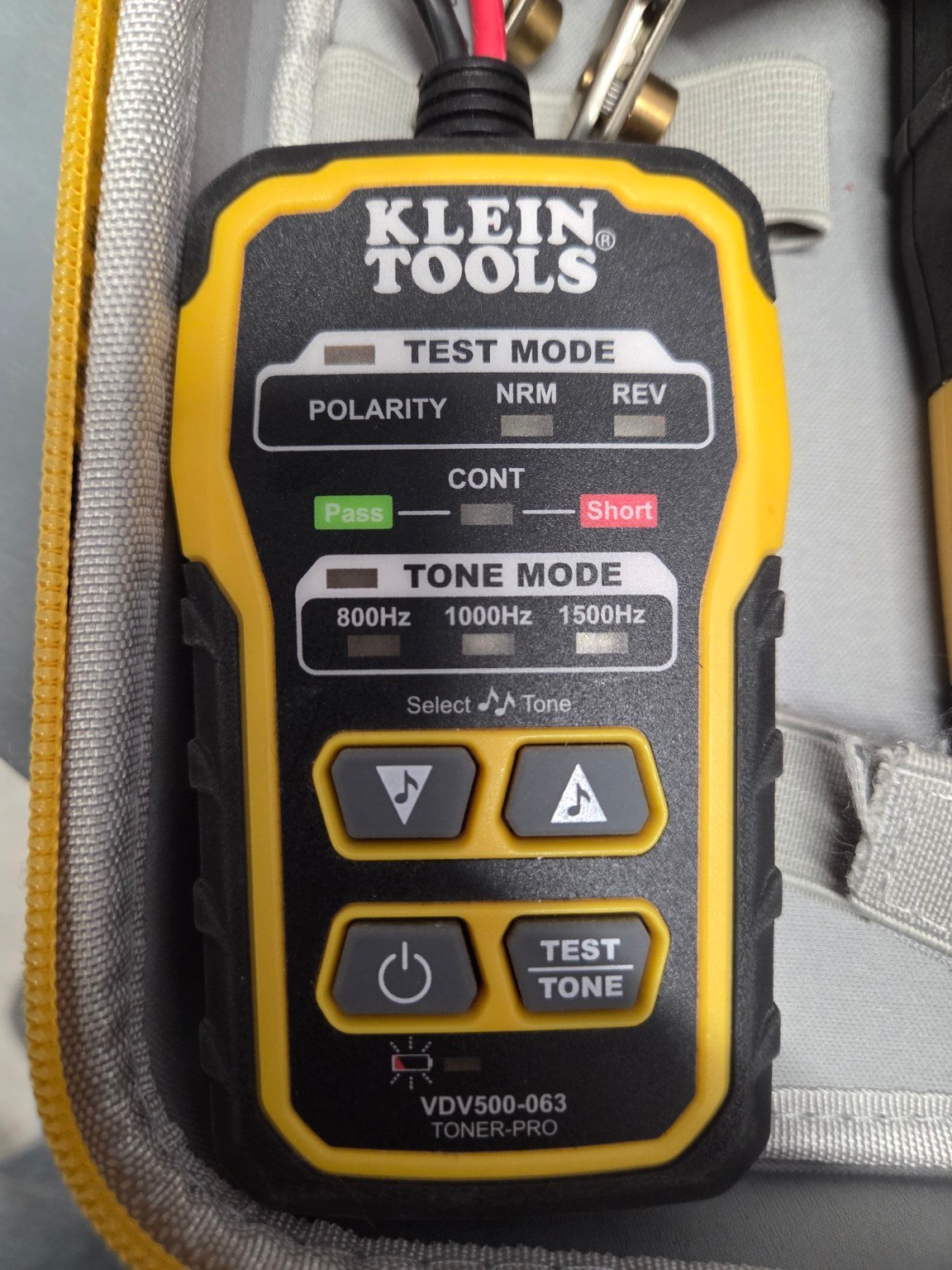
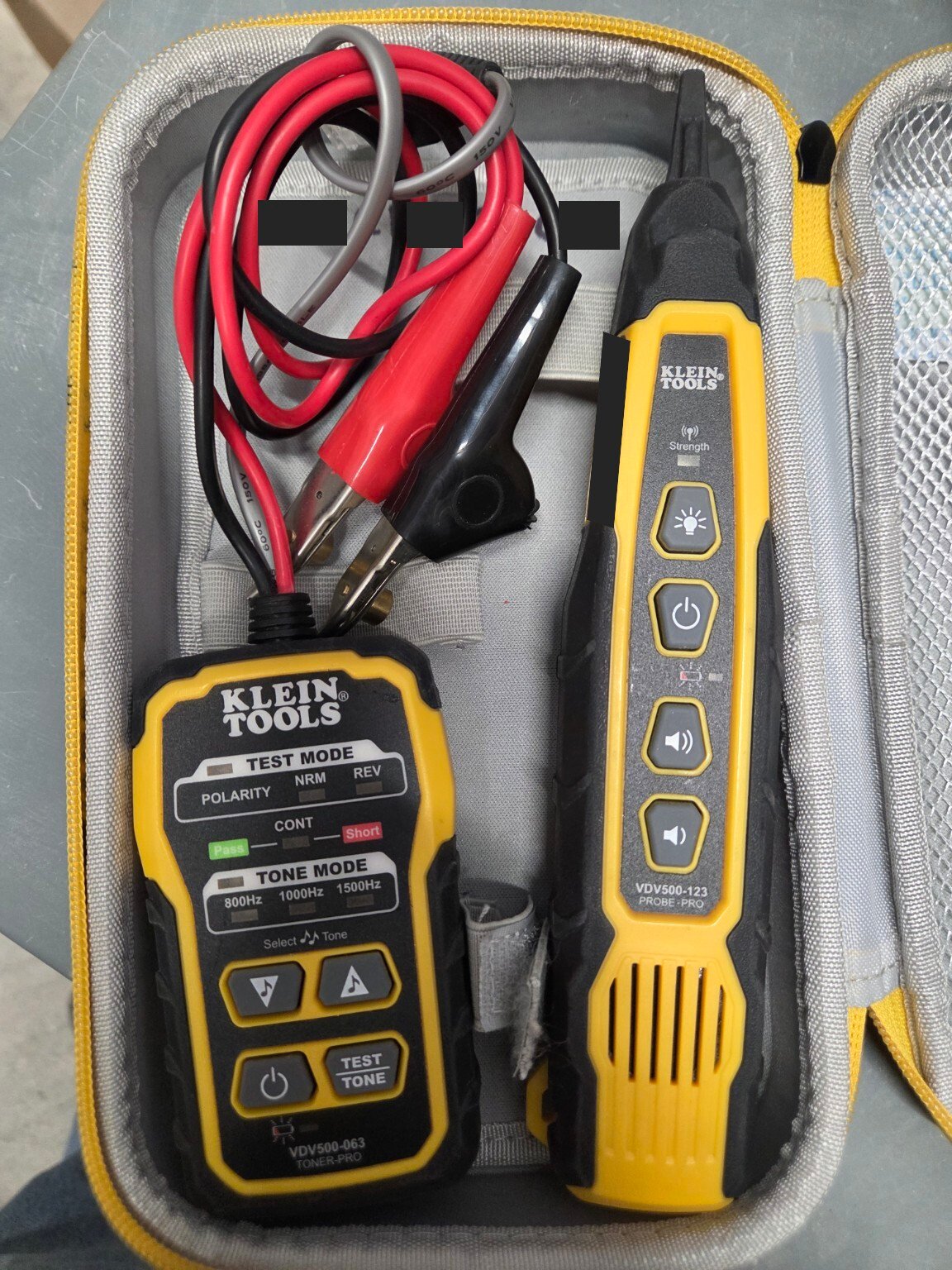
My field-used equipment. Personal name markings obscured; original tool labels and controls preserved.
Klein Tools Tone & Probe PRO Kit
I personally own and use this toner and probe as part of my field toolkit as a NICET Level IV Fire Alarm Systems technician. It helps identify cables and trace individual conductors or wire pairs during appropriate low-voltage troubleshooting.
- Apply a tone to isolated, non-energized wiring, then use the probe to identify the matching cable or pair in an accessible bundle or at a termination.
- The Toner-PRO provides five tone cadences and LED continuity indications for basic conductor checks.
- The adjustable-volume Probe-PRO includes a work light and a terminal block to help confirm the toned pair.
Use it alongside your other testers. The toner and probe complement a multimeter and the IDEAL VDV II Pro cable verifier. Use the meter for electrical measurements and the verifier for wiremap and distance-to-fault checks; a detected tone alone does not establish cable performance or circuit health.
Exact kit: VDV500-820
Includes VDV500-063 Toner-PRO, VDV500-123 Probe-PRO, attached ABN clip leads and RJ11 connection, VDV770-500 padded zipper pouch, and eight AAA batteries. Headphones are not included. My photographs show my own carrying case; the supplied pouch may differ.
Essential Hand Tools
The everyday tools in my kit for preparing conductors and working with small terminals and fasteners.
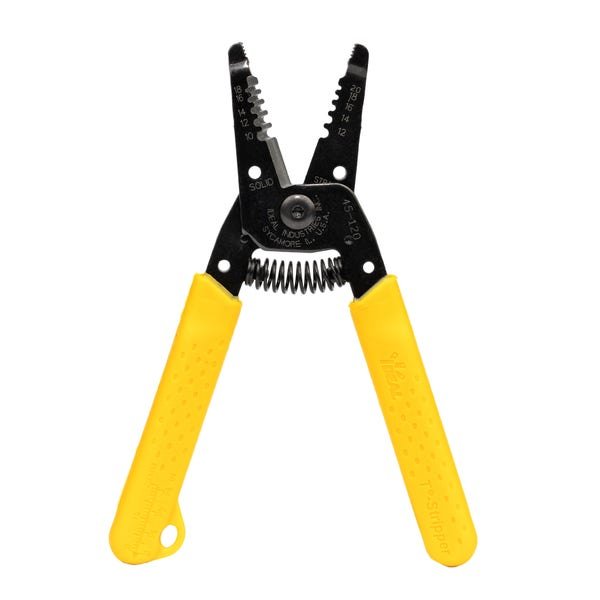
IDEAL T-Stripper AWG
45-120 · T-5
A straightforward wire stripper in my field toolkit, with dedicated stripping holes, a cutting edge and a spring-loaded opening.
Match the conductor:
10–18 AWG solid
12–20 AWG stranded
Use the correct hole for the wire size and construction. Other T-Stripper models cover different gauge ranges.
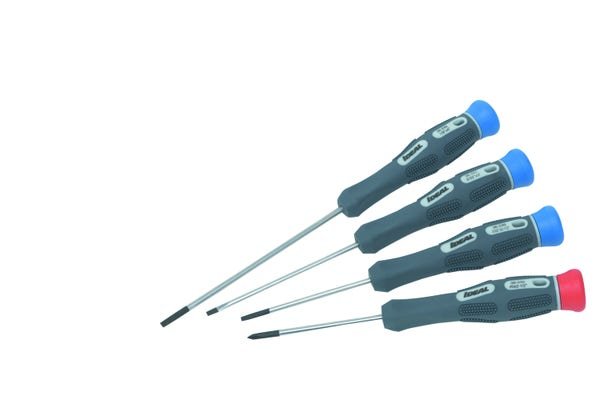
IDEAL 4-Piece Electronic Screwdriver Set
36-249 · Slim electronics set
The small screwdriver set I use alongside my full-size driver for precision work and tight terminal areas.
- 3/32 in. cabinet tips with 2½ in. and 3 in. blades.
- 1/8 in. cabinet tip with a 4 in. blade.
- #0 Phillips with a 2½ in. blade.
Color-coded spinner caps. This is the four-piece 36-249 set, not the seven-piece 36-248.
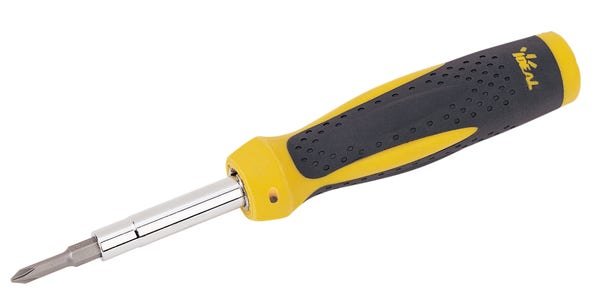
IDEAL Multi-Bit Screwdriver
35-908 · 7-in-1 Twist-a-Nut
My general-purpose multi-bit screwdriver combines common driver sizes in one handle.
- #1 and #2 Phillips tips.
- 1/4 in. and 3/16 in. slotted tips.
- 1/4 in. and 5/16 in. nut drivers.
- Wire connector wrench in the handle.
Check for model 35-908; other IDEAL multi-bit drivers have different bit combinations.
Storage & Organization
These two Klein bags have made my daily work more organized when moving from job to job.
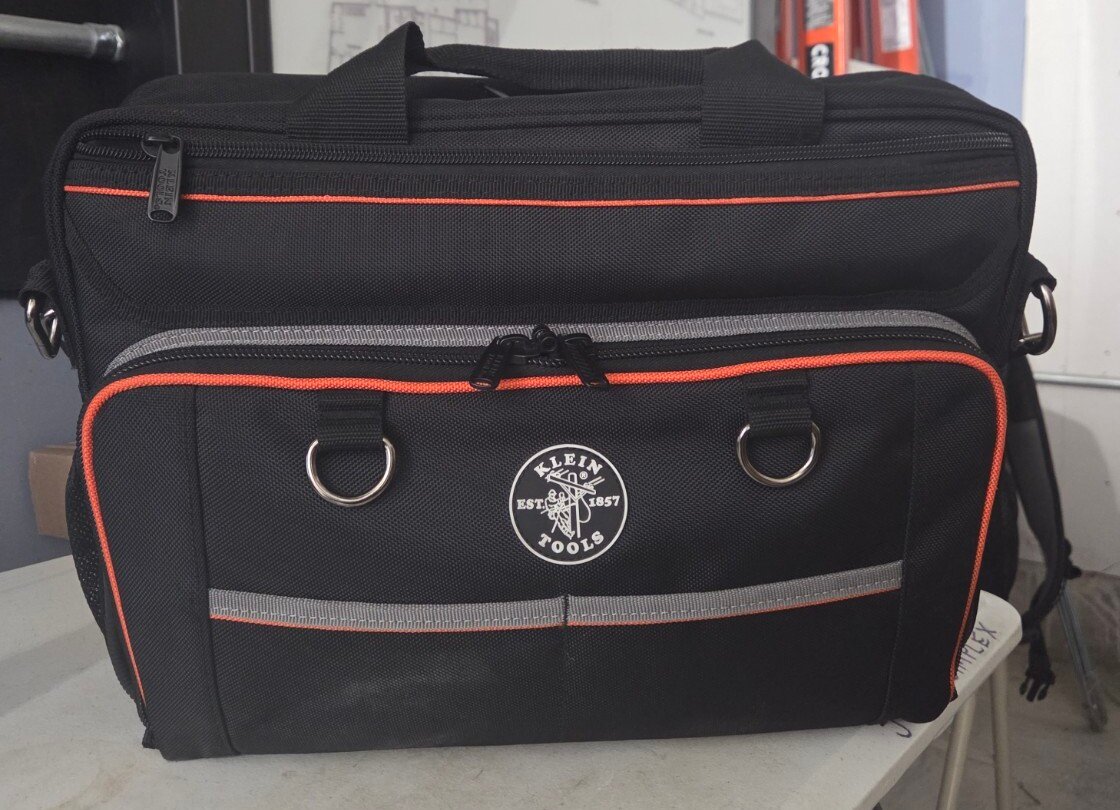
Klein Tools Tradesman Pro Tech Bag
This is the computer bag in my daily setup. Alongside my tool backpack, it has helped me stay organized as I move from one job to the next.
- A separate laptop compartment keeps the computer apart from tools.
- 22 pockets provide places for adapters, cables and other small essentials.
- A zippered paperwork pocket and organizer pockets help keep work materials together.
- Carry handles and a shoulder strap provide two ways to carry the bag.
Model: 55455M · Tradesman Pro Tech Bag with laptop pocket
Check the compartment dimensions against your laptop and case before ordering. The bag is sold without a computer, tools or accessories.
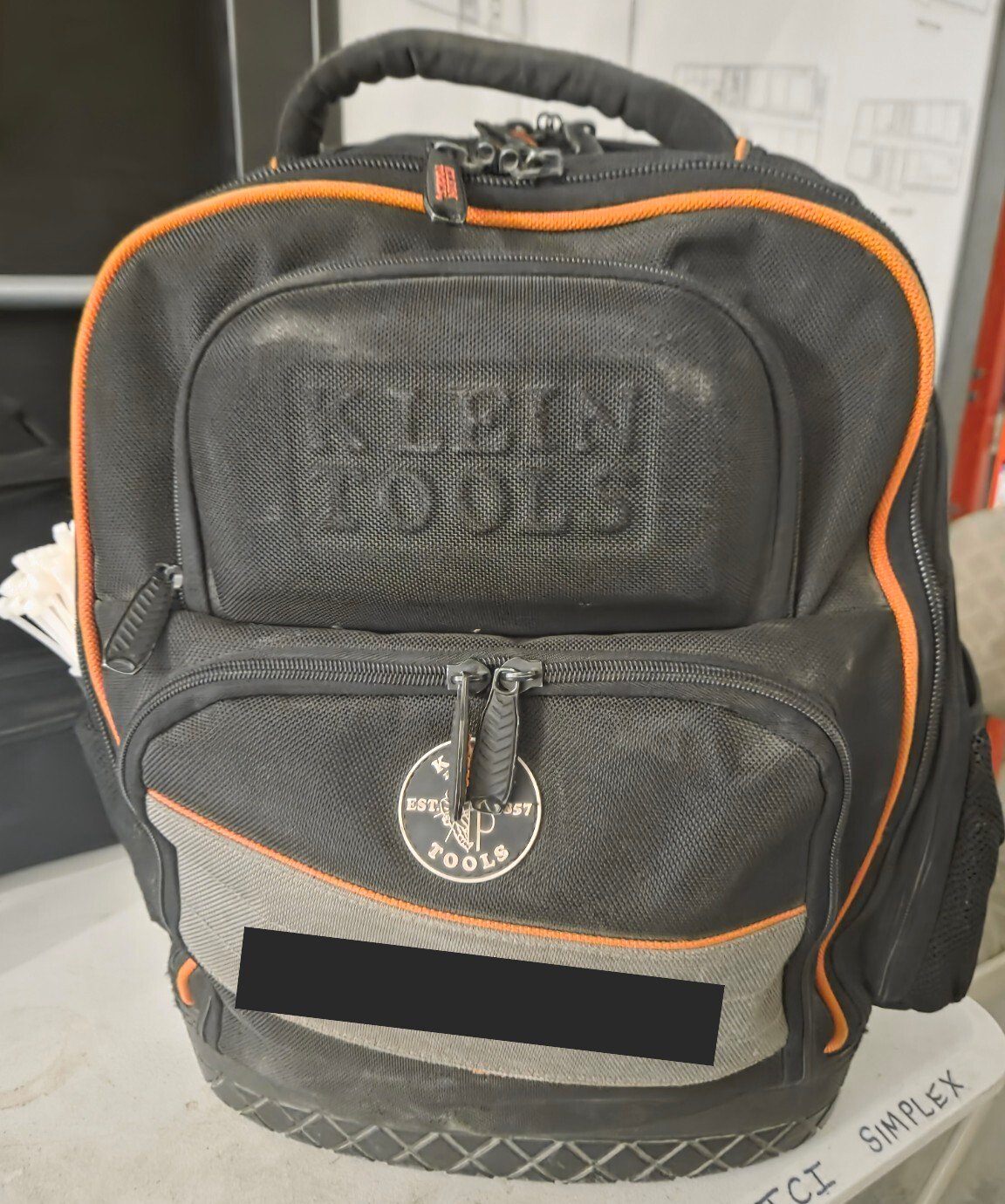
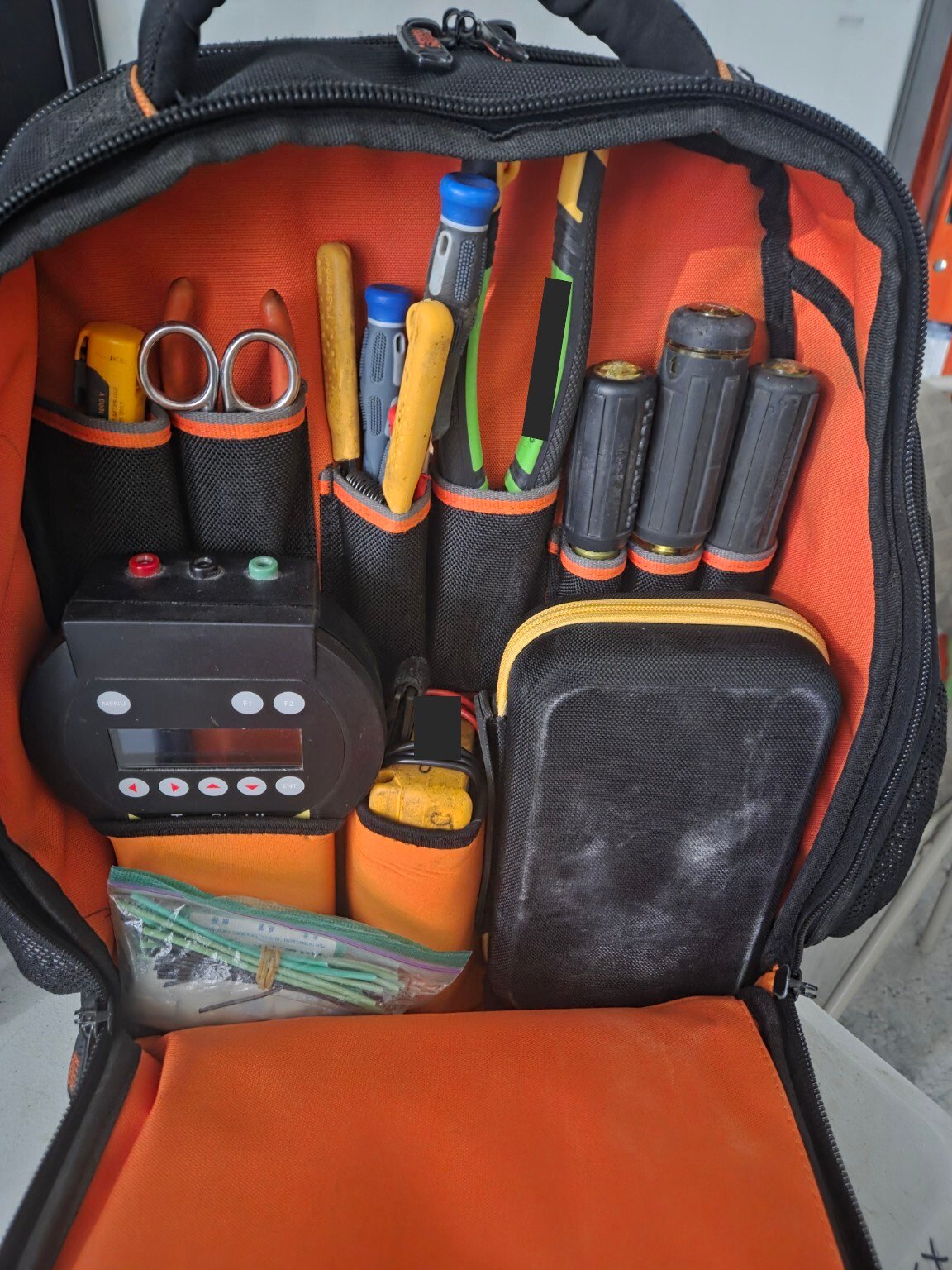
Original photographs. Personal markings obscured. Tools and accessories shown are my own and are not included with the bag.
Klein Tools Tradesman Pro Tool Backpack
This is the tool backpack I use with my computer bag. The pair has made my daily work very organized when moving from job to job. The interior photo shows how I arrange my own tools.
- 39 pockets provide separate places for hand tools and small items.
- A bright orange interior makes the contents easier to see.
- The hard molded front pocket provides protected storage for safety glasses.
- A fully molded bottom and padded shoulder straps support daily carrying between work areas.
Model: 55421BP-14 · Tradesman Pro Tool Backpack, 39 pockets, black/orange/gray
This recommendation is for the backpack only. Tools, meters, pouches and other contents pictured are not included.
Know the tool.
Understand the circuit.
Pair your toolkit with practical lessons on how fire alarm systems work.
Use the right method for the job.
Follow the instrument manual, equipment manufacturer instructions and your company’s test procedures. Select the correct function, input and measurement rating. Resistance and continuity measurements require de-energized, isolated circuits.
These personal tool recommendations do not replace project requirements, approved test procedures or required calibration.